A New Framework In Human Mechanics and Manual Treatment
The Institute of Collective Mechanics (ICM) is an international educational organization focused on the study of human structure, movement, force distribution, and mechanical adaptation.Collective Mechanics examines how the body functions as an integrated mechanical system rather than as isolated anatomical parts.The Institute provides postgraduate education, international seminars, certification pathways, and advanced
professional development in mechanical reasoning and integrated human function.
Core Areas of Study
Functional anatomy
Integrated biomechanics
Human movement
Mechanical reasoning
Structural relationships
Clinical observation
Mechanobiology
Systems-based function
The ICM Philosophy
Principles over memorized techniques
Mechanical reasoning over protocols
Global pattern recognition over isolated symptom models
Progressive clinical development
International educational standards
Final Positioning
International Access With
Progressive Standards
The Institute of Collective Mechanics is intentionally designed to balance accessibility with professional rigor.
Introductory education welcomes a broad international audience, while advanced certification and Fellowship pathways maintain progressively higher educational and clinical standards.
The ICM Mission
Advance mechanical reasoning
Develop integrated clinical thinking
Promote systems-based biomechanics
Support postgraduate professional education
Build an international educational community
Maintain high-level professional standards
The Future of Integrated Mechanical Education
Collective Mechanics represents an evolving framework for understanding human function through integrated mechanical relationships.
The Institute exists to develop clinicians and educators capable of reasoning globally, observing mechanically, and applying principled intervention within the complexity of the human system.
r Method is now positioned as:
the operational therapeutic framework
the applied treatment methodology of CM
the bridge between reasoning and hands-on application
The phrase: “all techniques become tools that serve larger mechanical principles” is now structurally embedded into the identity of the system, which is a very strong differentiator.
A Clinical Method Developed Through Practice
Collective Mechanics emerged through more than twenty-five years of clinical observation and teaching in osteopathy.
Over time, recurring patterns appeared in patients that conventional explanations could not fully describe. Restrictions were rarely isolated. Compensation followed predictable pathways. Symptoms often appeared far from their mechanical origin.
These observations led to a broader understanding: the human body behaves as a distributed mechanical system governed by the principles of force transmission, load redistribution, and structural adaptation.
Collective Mechanics organizes these principles into a coherent framework that clinicians can use in everyday practice.
Why Clinicians Study Collective Mechanics
Healthcare professionals who study Collective Mechanics often report a profound shift in their understanding of the body.
Instead of memorizing techniques for specific problems, practitioners learn to interpret structural patterns through mechanical reasoning.
This allows clinicians to:
Recognize compensation patterns more clearly
Identify mechanical priorities within complex cases
Apply treatment with greater precision
Develop deeper confidence in clinical reasoning
For many practitioners, Collective Mechanics becomes the conceptual bridge that connects anatomy, biomechanics, and manual treatment.
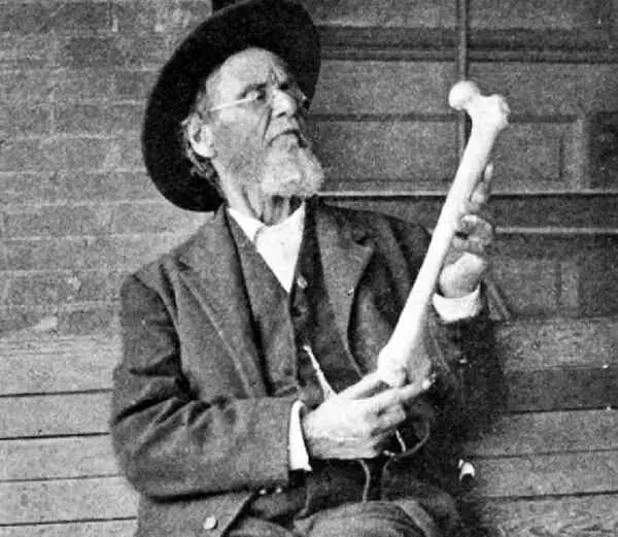
Andrew Taylor Still
– Founder of Osteopathy
There are four main principles that were established by the founder of Osteopathy, Andrew Taylor Still, at the end of the 19th Century. They form the basis of Osteopathic philosophy and thinking and influence the decisions made in diagnosing and treating patient’s symptoms:
The body is a unit. The whole body is greater than the sum of its parts with each part affecting each and every other part of the body.
Structure and function are reciprocally interrelated. The body is an integration of person’s structure (anatomy) and function (physiology). If the structure of the body is compromised, through overuse injuries or a chronic problem, for example, the function will be adversely affected in terms of pain, stiffness, instability, etc and vice versa.
The body is its own medicine chest. The body is usually able to resolve nearly all but the most serious of conditions by removing restrictive barriers and enabling their own healing mechanisms to be stimulated and supported.
The rule of the artery is supreme. Healing requires a good blood supply to provide the necessary immune support and nutrients.
Professional Education
The Institute of Collective Mechanics offers structured postgraduate education designed for healthcare professionals seeking to deepen their clinical understanding.
Training combines:
Conceptual lectures
Clinical demonstrations
Supervised practical work
Applied clinical reasoning
Participants learn to analyze the body as a dynamic mechanical system and apply that understanding directly in patient care.
International Development
The term Collective Mechanics has received official trademark authority within the European Union, marking an important step in the international development of this work and the formal recognition of the method.
The Institute now serves as the central educational hub for practitioners studying this framework.