A Different Way to Understand — and Treat — Human Dysfunction
Collective Mechanics is an integrated therapeutic and mechanical model for understanding how the human body adapts, compensates, and functions under load.Rather than treating isolated symptoms or focusing only on local tissue dysfunction, Collective Mechanics teaches practitioners how to understand the body as a coordinated mechanical collective.
The goal is not simply to identify pain. The goal is to understand why the system adapted the way it did — and how to restore more efficient mechanical organization.
What Makes Collective Mechanics Different?
Most manual and rehabilitation systems focus primarily on:
- Isolated joints
- Local tissues
- Symptomatic regions
- Technique protocols
- Regional treatment models
Collective Mechanics approaches the body differently.
The model studies how forces are distributed, transferred, absorbed, and compensated across the entire system simultaneously.
Treatment is based on understanding:
- Global compensation patterns
- Force transmission
- Mechanical relationships
- Planar balance
- Pressure relationships
- Suspension systems
- Movement adaptation
- Collective structural behavior
Rather than asking: “Where is the problem?” Collective Mechanics asks: “How has the system adapted?”
What Will I Learn to Do?
Collective Mechanics teaches practitioners how to observe and treat the body through integrated mechanical reasoning.
Students learn how to:
- Identify global compensation patterns
- Understand why dysfunction develops
- Interpret movement mechanically
- Recognize dominant planes and vectors
- Observe load transfer through the body
- Understand structural adaptation
- Apply treatment with mechanical intent
- Integrate local treatment into global function
The educational focus is not memorization. It is clinical reasoning.
The Integrated Planar Method
The treatment model used within Collective Mechanics is known as the Integrated Planar Method.The Integrated Planar Method teaches practitioners how to organize treatment around the mechanical relationships of the entire body rather than isolated symptomatic regions.
The method examines how:
- Forces move through planes
- Regions compensate for one another
- Tension distributes through systems
- Movement patterns become reinforced
- Mechanical overload develops
- The body adapts globally over time
Treatment is directed toward restoring more efficient mechanical organization across the collective system.
What Does Treatment Look Like?
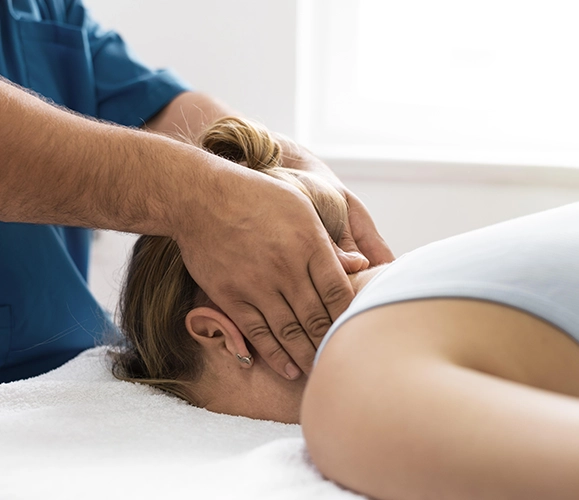
Collective Mechanics treatment is practical, adaptable, and principle-based.Practitioners learn how to apply hands-on intervention through reasoning rather than rigid technique sequences.
Treatment may involve:
- Direct or indirect approaches
- Joint articulation
- Soft tissue application
- Positional balancing
- Mechanical decompression
- Vector redirection
- Respiratory integration
- Movement integration
- Global balancing strategies
No single technique defines Collective Mechanics. Instead, all techniques become tools that serve larger mechanical principles.
Principles Before Technique
Collective Mechanics does not teach practitioners to depend on memorized techniques.The Institute teaches practitioners how to think mechanically first.
Within the Integrated Planar Method:
- Technique is secondary to reasoning
- Application follows mechanical understanding
- Intervention is adapted to the presentation of the individual
- Treatment is guided by principles rather than protocols
This allows practitioners to become more adaptable, more analytical, and more clinically integrated.Rather than collecting techniques, practitioners learn how to organize treatment around mechanical intent.
A Model of Integrated Therapeutic Reasoning
Collective Mechanics integrates:
- Functional anatomy
- Integrated biomechanics
- Osteopathic principles
- Human movement
- Mechanical reasoning
- Structural relationships
- Clinical observation
- Systems-based adaptation
The result is a therapeutic model designed to help practitioners:
- Think globally
- Treat more systematically
- Understand compensation patterns
- Improve treatment integration
- Develop stronger clinical reasoning
- Move beyond symptom-based intervention
Who Is Collective Mechanics For?
Collective Mechanics is designed for practitioners seeking a more integrated understanding of treatment, biomechanics, and human function.International introductory pathways are open to qualified professionals interested in advanced mechanical and therapeutic reasoning.
Suitable International Backgrounds
- Osteopathic practitioners
- Physiotherapists
- Chiropractors
- Athletic therapists
- Rehabilitation professionals
- Massage therapists
- Strength and conditioning professionals
- Healthcare practitioners with an interest in biomechanics and integrated treatment systems