From Technique-Based Thinking to Mechanical Reasoning
The Collective Mechanics method teaches practitioners how to observe and interpret the body as a coordinated mechanical system.Rather than focusing only on symptoms, practitioners learn how to identify broader compensation patterns and mechanical relationships
The Method Focuses On
- Global observation
- Mechanical relationships
- Movement adaptation
- Load transfer
- Force continuity
- Planar organization
- Structural balance
- Compensation strategies
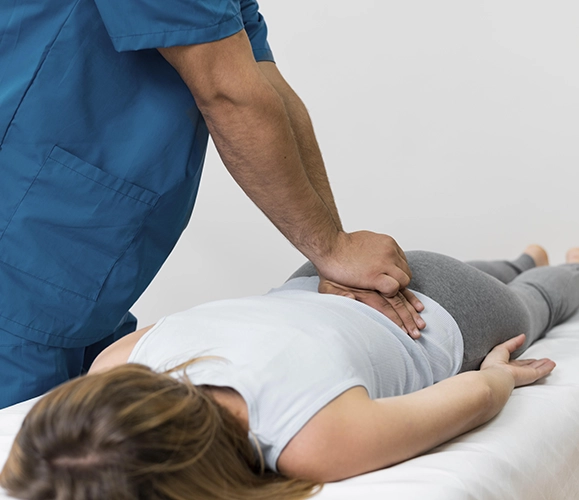
Observation Before Intervention
The Collective Mechanics method prioritizes observation and reasoning before treatment. Students develop the ability to interpret how the body has adapted mechanically before applying intervention.
Students Learn To
- Observe posture globally
- Analyze movement patterns
- Recognize dominant vectors
- Identify compensation systems
- Interpret load distribution
- Develop mechanical hypotheses
- Apply intervention with mechanical intent
Principles of Mechanical Application
Intervention within Collective Mechanics is based on principles rather than memorized protocols.Applications are adapted to the presentation of the individual.
Mechanical Applications May Include
- Vector redirection
- Load redistribution
- Mechanical balancing
- Tissue decompression
- Barrier engagement
- Planar integration
- Suspension restoration
Progressive Clinical Development
The educational system is intentionally progressive. Students begin with foundational concepts before advancing into complex regional and systems-based integration.
Advanced Areas Include
- Dynamic movement analysis
- Complex compensation patterns
- Respiratory mechanics
- Visceral mechanics
- Cervical and cranial integration
- Mechanobiology
- Advanced clinical reasoning